How to Tell If Your Brakes Need Replacing Before They Start Squealing

Most drivers wait for their brakes to scream at them before doing anything about it. And while that high-pitched squeal is indeed a warning sign, it’s not the first one — and relying on it means you’ve already let things go further than you should have.
Brake wear is gradual. It happens over thousands of miles, and your car gives you plenty of signals along the way. The problem is that most people don’t know what to look for. Learning to read those early warning signs can save you money, protect your rotors, and — most importantly — keep you and everyone else on the road safe.
Here’s how to tell your brakes are wearing out before they start making noise.
Understand How Brakes Wear in the First Place
Before you can spot the warning signs, it helps to understand what’s actually happening inside your brake system.
When you press the brake pedal, hydraulic pressure pushes a caliper against a rotor — the large metal disc that spins with your wheel. Sandwiched between the caliper and the rotor are the brake pads: flat slabs of friction material that grip the rotor and slow the car down. Every time you brake, a tiny amount of that friction material wears away.
New brake pads typically start at 10–12mm of thickness. Most mechanics recommend replacing them at around 3–4mm. At 2mm or less, you’re in dangerous territory. At zero — metal on metal — you’re looking at rotor damage, significantly longer stopping distances, and a repair bill that’s two to three times higher than it needed to be.
The squeal most people recognize is built into the pad itself: a small metal tab called a wear indicator that’s designed to contact the rotor and make noise when pads reach a critically low thickness. It’s a last resort warning, not an early one.
Visual Inspection: The Easiest Check You’re Not Doing
You don’t need to remove your wheels to get a rough idea of your brake pad thickness. On most vehicles, you can see the brake pad through the spokes of the wheel.
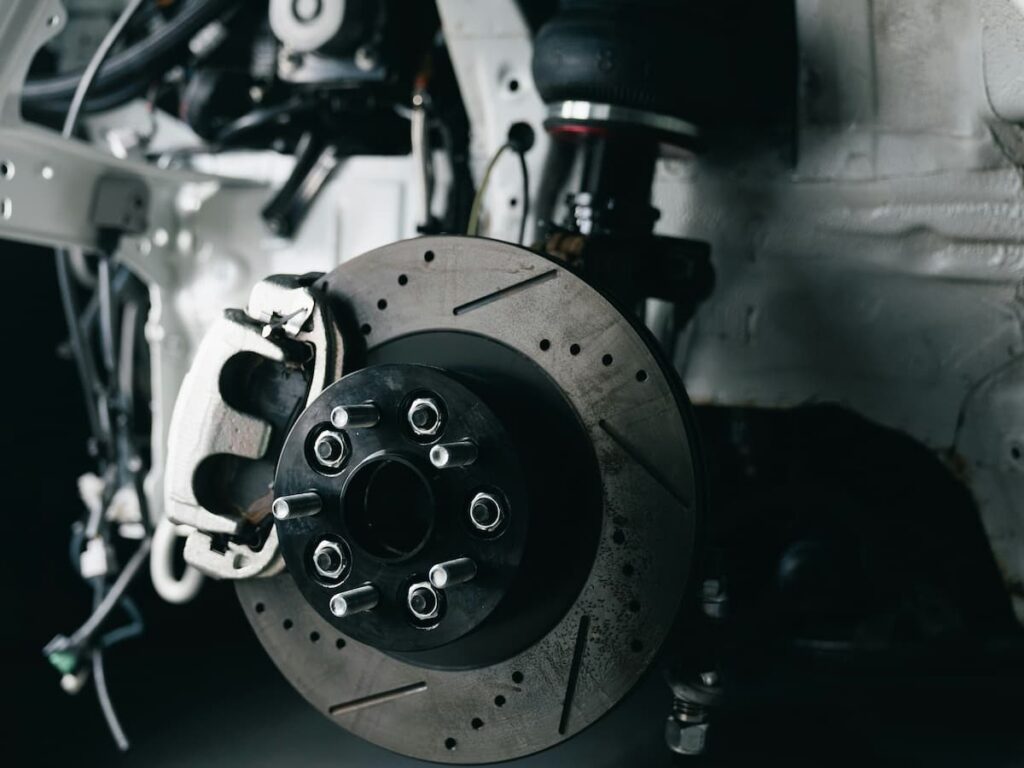
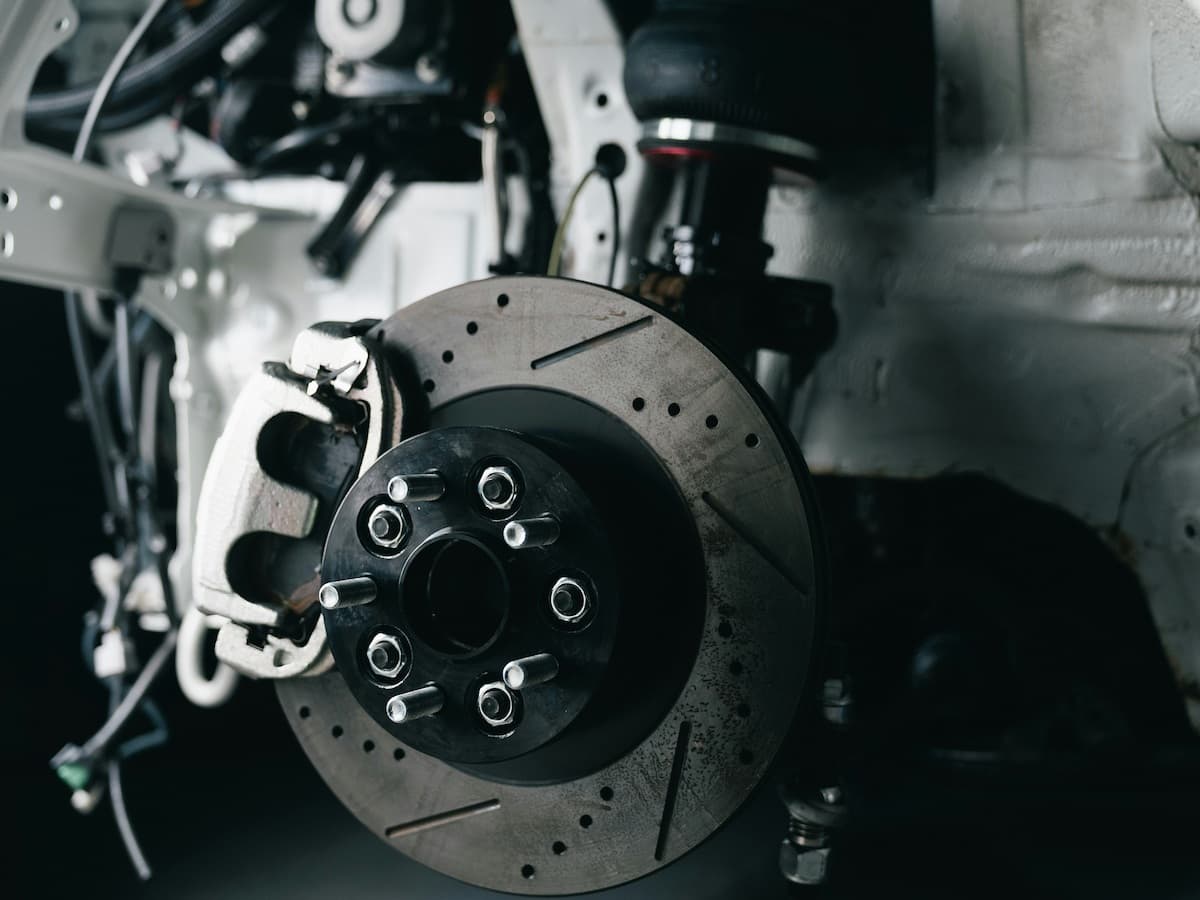
Look for the rotor — the shiny metal disc — and the caliper clamped around it. Between the caliper and the rotor, you’ll see the brake pad. If the pad looks thin — less than a quarter inch — it’s time to have it inspected by a mechanic. If you can barely see any pad material at all, don’t wait.
For a more thorough look, have your tires removed during your next rotation. A good tire shop or mechanic will measure pad thickness and tell you exactly how much life is left. Many will do this as part of a free inspection.
What you’re looking for beyond thickness: scoring or deep grooves on the rotor surface, rust buildup around the rotor edge (some surface rust is normal, but heavy pitting is not), and uneven wear between the inner and outer pad, which can indicate a stuck caliper.
Changes in How Your Car Stops
One of the most reliable early indicators of brake wear isn’t something you see — it’s something you feel. Pay attention to how your car behaves when you brake, because changes in stopping feel often show up well before any noise does.
Longer stopping distances. If your car seems to take more distance to come to a stop than it used to — especially at highway speeds — that’s a meaningful change. Worn pads have less friction material to grip the rotor, which reduces braking efficiency. This one is easy to dismiss or not notice consciously, which is why it’s worth thinking about deliberately from time to time.
A spongy or soft brake pedal. If the pedal sinks further toward the floor than usual before the brakes engage, it may indicate air in the brake lines, low brake fluid, or worn pads that are causing the caliper to travel further to make contact. Any of these warrants a look.
Pulling to one side when braking. If your car drifts left or right when you apply the brakes, it could mean the pads are wearing unevenly across the two front wheels — often caused by a stuck caliper or uneven pad wear. This is a handling issue as much as a brake issue, and it shouldn’t be ignored.
Pulsing or vibration through the pedal. A pedal that pulses or vibrates under your foot during braking usually points to warped rotors, which can happen when brakes are worn and overheated repeatedly. Warped rotors don’t just affect comfort; they reduce the consistency of your braking force.
Sounds That Come Before the Squeal
The classic squeal from the wear indicator is the most recognizable brake sound, but there are others worth knowing about — and some show up earlier.
Grinding. A grinding or growling sound when braking almost always means metal-on-metal contact. Either the pads are completely gone, or debris has gotten lodged between the pad and rotor. Either way, stop driving and get it looked at immediately. Every mile you drive in this condition is damaging the rotor.
Clicking or rattling. Brake pads are held in place by clips and hardware designed to keep them from moving. When pads wear down, or that hardware loosens, you may hear a clicking or rattling sound when you hit the brakes or drive over a bump. It’s easy to dismiss as a minor rattle, but it’s worth having checked.
A faint scraping sound at low speeds. Light surface rust on rotors is completely normal, especially after a car has been sitting overnight or in wet weather. It typically clears up after a few stops. But if you hear a consistent scraping at low speeds that doesn’t go away after a few miles, that’s different — and worth investigating.
Mileage: A Rough but Useful Benchmark
Brake pads don’t have a universal lifespan, but mileage gives you a rough starting point. Most brake pads last between 25,000 and 65,000 miles, with a wide range depending on pad material, driving habits, and conditions.
City driving — with its constant stop-and-go traffic — wears brakes significantly faster than highway driving. Drivers who ride the brakes downhill, brake late and hard, or tow heavy loads will see shorter pad life. Drivers with smooth, anticipatory habits can get considerably more miles out of a set of pads.
If you’re approaching 30,000–40,000 miles on your current pads and haven’t had them inspected recently, that’s a reasonable trigger to have someone take a look — even if nothing feels wrong yet.
When to Have Them Inspected (Not Just Replaced)
Here’s a practical framework for staying ahead of brake wear:
- Every tire rotation (typically every 5,000–7,500 miles): ask for a brake inspection at the same time. Most shops include this at no extra charge.
- Once a year: even if you haven’t hit a mileage milestone, an annual brake check is a good habit, especially before winter.
- Any time something feels off: don’t talk yourself out of it. Changes in stopping feel, new sounds, or pulling during braking are all reasons to get an inspection sooner rather than later.
A brake inspection doesn’t commit you to a repair. It just tells you where you stand — and whether you have a few thousand miles of cushion or need to act now.
The Real Cost of Waiting
Here’s the math that should motivate you: a standard brake pad replacement typically costs between $150 and $300 per axle, including labor. If you let the pads wear down to metal-on-metal contact and damage the rotors, that cost jumps to $300–$600 or more per axle, because now you’re replacing rotors too.
Beyond the money, there’s the safety calculation. Worn brakes mean longer stopping distances. On a highway at 65 mph, the difference between healthy and worn brakes can be several car lengths — which is the difference between a close call and a collision.
The squeal is there to catch your attention as a last resort. But you don’t have to wait for it. Your brakes will tell you what they need — through what you see, what you feel, and what you hear — long before they start screaming.
Pay attention early, and you’ll spend less money, drive more safely, and never have to learn what grinding metal sounds like from inside your own car.
(featured image: Erik Mclean / Unsplash)